Meal Prep 101: How to Save Time, Eat Healthy, and Stay Consistent
You know that Sunday evening panic when you realize you have absolutely nothing planned for the week ahead? Yeah, that used to be me every single week. I’d wake up Monday morning with zero food in the house, grab some overpriced coffee and a sad muffin on the way to work, then wonder why I felt like garbage by noon and was hemorrhaging money on takeout.
Meal prep changed all that. And before you roll your eyes thinking this is some fitness influencer thing where I’m going to tell you to eat chicken and broccoli out of identical containers for seven days straight—stop. That’s not what this is about. Meal prep is simply about being smarter than your future tired, hungry, decision-fatigued self. It’s about setting yourself up so that eating well becomes the path of least resistance instead of this monumental effort you can never quite manage.
I’ve been meal prepping consistently for about three years now, and honestly, it’s one of those habits that creates a domino effect on everything else. Better food means better energy. Better energy means better focus. Better focus means you’re not relying on your fourth coffee to make it through the afternoon. Let me show you exactly how to make this work without losing your mind or your entire weekend.
Why Meal Prep Actually Works (And Why You’ve Failed Before)
Let’s get real about why most people start meal prepping and then quit after two weeks. It’s not because meal prep doesn’t work—it’s because people approach it completely wrong.
The biggest mistake? Trying to cook fourteen elaborate meals on Sunday afternoon while also doing laundry, cleaning the house, and dealing with everything else life throws at you. You end up exhausted, your kitchen looks like a tornado hit it, and by Wednesday you’re so sick of eating the same thing that you’d rather gnaw on cardboard.
Here’s what actually works: Start ridiculously small. I’m talking prep just your lunches for three days. That’s it. Not breakfast, lunch, and dinner for seven days. Not some elaborate five-course situation. Just three lunches.
When you remove the pressure of perfection, meal prep becomes this manageable thing instead of this looming obligation. You build momentum slowly. First you master three lunches. Then maybe you add breakfast. Eventually you’re prepping most of your week and it feels easy because you’ve built up to it gradually.
The psychology here matters. According to research on habit formation, starting with tiny, achievable goals creates success patterns that make you more likely to stick with new behaviors. You’re not relying on motivation—you’re building systems that work even when you don’t feel like it.
Setting Up Your Meal Prep Foundation
Before you even think about what you’re cooking, you need to get your setup right. And I don’t mean buying a bunch of expensive equipment—I mean creating a framework that makes meal prep sustainable.
Pick Your Prep Window
Most people default to Sunday, but that’s not a rule. Maybe Saturday morning works better for you. Maybe you’d rather do a split prep—Wednesday evening for the back half of the week. The point is to find a time that consistently works in your actual schedule, not some idealized version of your schedule.
I prep Sunday afternoons because that’s when I have the mental space for it. My kitchen’s clean from the weekend, I can throw on a podcast, and I’m not rushed. Find your version of that.
The Container Situation
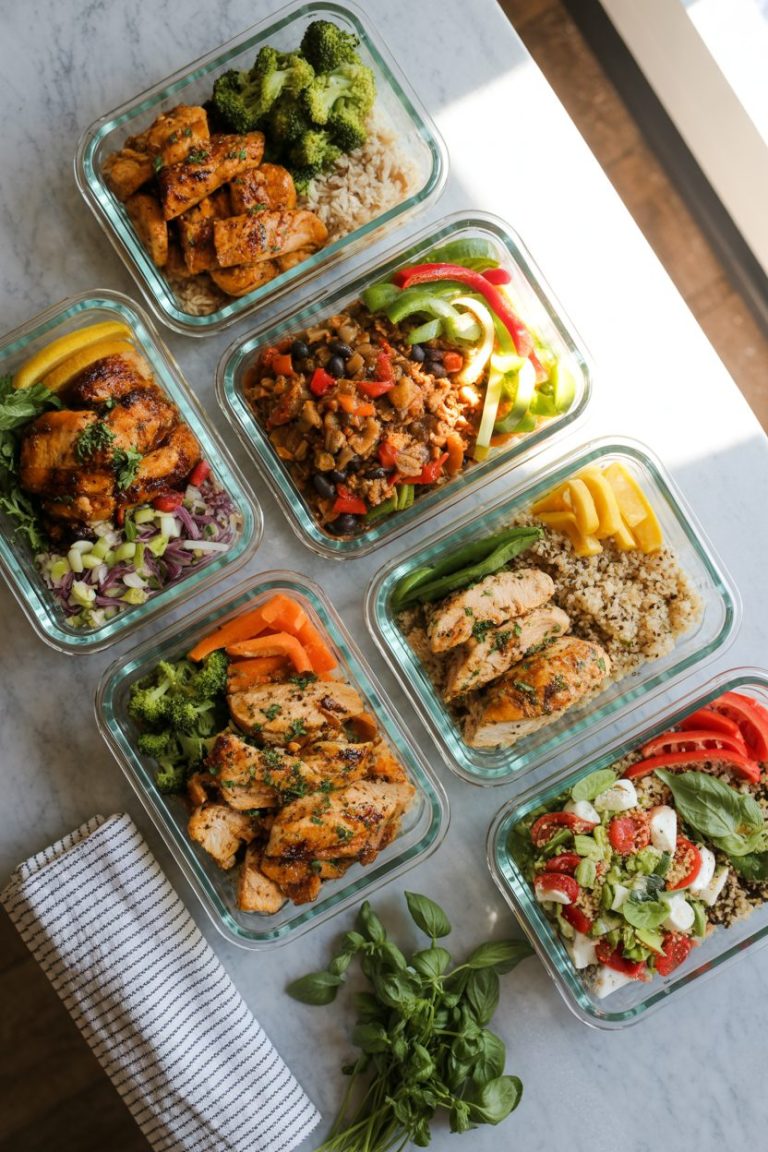
You need decent containers. Not twenty different sizes and shapes that never stack properly—just a solid set of glass containers that you can see through. I use these glass meal prep containers because they don’t retain smells, they stack perfectly, and I can actually see what’s inside without playing refrigerator roulette.
Get enough containers for what you’re prepping. If you’re doing five lunches, you need five lunch containers. Seems obvious, but I’ve watched people try to meal prep with three mismatched Tupperware containers and then wonder why it’s not working.
The Kitchen Tools That Actually Matter
You don’t need a $400 food processor or some fancy gadget that you’ll use once. Here’s what actually makes meal prep faster:
A sharp chef’s knife—seriously, you’ll cut your prep time in half with a knife that actually cuts instead of smushes. This knife sharpener takes thirty seconds to use and makes a massive difference.
Good cutting boards. I have two large ones so I can keep raw meat separate from vegetables without constantly washing between tasks.
Sheet pans—at least two half-sheet pans. You’ll use these constantly for roasting vegetables and proteins simultaneously. Line them with parchment paper or grab this reusable silicone liner to make cleanup stupidly easy.
For more meal prep inspiration that puts these tools to use, you might want to check out these beginner-friendly meal prep recipes or explore weekly meal planning strategies that work with your lifestyle.
The Actual Meal Prep Process (Step by Step)
Alright, let’s walk through how a typical prep session actually looks. I’m going to use a basic week as an example, but you’ll adapt this to whatever you’re making.
Step 1: Choose Your Proteins (Max Two)
Pick two protein sources for the week. Maybe it’s chicken thighs and hard-boiled eggs. Maybe it’s ground turkey and salmon. The constraint here is intentional—you’re not trying to become a restaurant.
Cook your proteins in large batches using the easiest methods possible. Chicken thighs? Season them, throw them on a sheet pan, bake at 400°F for 35-40 minutes. Ground turkey? Brown it in a big skillet with whatever seasonings you want. Hard-boiled eggs? Instant Pot for 5 minutes or boil a dozen on the stove.
This is your foundation. These proteins will mix and match with different sides and seasonings throughout the week, so they don’t feel repetitive.
Step 2: Batch Cook Your Carbs
While your protein is cooking, get your carbs going. Rice in a rice cooker or Instant Pot. Quinoa on the stovetop. Sweet potatoes in the oven. Oatmeal if you’re prepping breakfast.
I usually make a big batch of quinoa and a big batch of roasted sweet potatoes. This gives me options throughout the week—sometimes I want quinoa, sometimes I want sweet potato, sometimes I want both.
Step 3: Roast All The Vegetables
Here’s where sheet pans become your best friend. Chop whatever vegetables you’re feeling—broccoli, Brussels sprouts, bell peppers, zucchini, carrots, whatever. Toss them in olive oil, salt, and pepper. Spread them on sheet pans and roast at 425°F for 20-30 minutes depending on the vegetable.
You can roast multiple types of vegetables at once, but keep in mind that different vegetables cook at different rates. Broccoli might be done in 20 minutes while carrots need 30. Plan accordingly or just keep an eye on things and pull out pans as they finish.
Step 4: Assembly Time
Once everything’s cooked and cooled slightly, you’re just mixing and matching components into containers. Monday’s lunch might be chicken, quinoa, and roasted broccoli. Tuesday might be the same chicken with sweet potato and different vegetables. Same ingredients, different combinations.
This is where meal prep gets smart instead of hard. You’re not eating identical meals all week—you’re remixing the same base components in different ways so it stays interesting.
If you want to see how this plays out with specific meals, these high-protein meal prep ideas and complete weekly dinner plans show exactly how to structure your combinations.
Making Food That Doesn’t Suck By Wednesday
The number one complaint about meal prep is that reheated food tastes bad. And yeah, if you’re reheating everything the same way and not thinking about texture or flavor, it’s going to be disappointing.
The Sauce Game Changer
Make or buy three to four different sauces to keep in your fridge. A good teriyaki, maybe some pesto, a yogurt-based ranch, and a spicy chili crisp situation. The same base meal tastes completely different depending on what you dress it with.
Monday’s chicken and vegetables with teriyaki tastes nothing like Thursday’s chicken and vegetables with pesto. Same prep, wildly different experience.
Strategic Seasoning
Don’t season everything the same way. If you’re batch cooking two proteins, season them with completely different flavor profiles. Your chicken gets Italian herbs. Your turkey gets taco seasoning. Even though they’re both just seasoned proteins, they’ll anchor totally different meals throughout the week.
The Fresh Element Trick
Add something fresh when you actually eat the meal. Chopped cilantro, a squeeze of lime, sliced avocado, fresh berries on your oatmeal—these thirty-second additions make reheated food taste alive instead of like leftovers.
I keep a container of cherry tomatoes, some fresh herbs, and pre-washed greens in my fridge specifically for this. When I’m reheating lunch, I throw on some fresh elements and suddenly it doesn’t taste like four-day-old meal prep anymore.
What Actually Reheats Well
Some foods are meal prep superstars. Roasted vegetables, grain bowls, soups, stews, baked proteins, casseroles—these all reheat beautifully. Other foods are terrible for meal prep. Anything fried gets soggy. Raw leafy greens wilt. Pasta gets mushy (unless it’s slightly undercooked initially).
Learn what works and stick to those foods. Don’t try to meal prep fried chicken and then get disappointed when it’s not crispy on day four. It was never going to be crispy on day four.
For recipes that specifically nail the reheating game, try these make-ahead freezer meals or explore one-pot dinner ideas that taste even better the next day.
Time-Saving Hacks That Actually Save Time
Let me share some strategies that cut my meal prep time in half once I figured them out.
The Multi-Tasking Method
Use every heat source you have simultaneously. Oven for roasting, stovetop for grains or sautéing, Instant Pot or slow cooker for something else. When you’re cooking three things at once instead of one thing after another, you collapse a three-hour process into ninety minutes.
Pre-Chopped Vegetables Aren’t Cheating
Yeah, pre-cut vegetables cost more. You know what else costs a lot? Ordering takeout because you were too tired to chop vegetables after work. If buying pre-diced onions or pre-cut butternut squash means you’ll actually meal prep instead of giving up, buy the pre-cut vegetables.
Nobody’s giving out awards for chopping your own onions. Get over it and use the shortcuts that work for you.
The Protein Shortcut
Rotisserie chicken from the grocery store is perfectly legitimate meal prep protein. So is canned tuna, pre-cooked frozen shrimp, or that package of pre-grilled chicken strips. If it gets you to actually prep meals instead of ordering DoorDash, it counts.
Freeze What You Won’t Eat
If you’re prepping for the full week, freeze half of it. Meals from Sunday will be fine by Thursday, but by the following Monday they’re pushing it. Freeze portions 4-7 and pull them out as you need them. Everything tastes fresher this way.
I use this set of freezer-safe containers specifically for this. Freeze on Sunday, pull one out Tuesday night for Thursday lunch, and it’s perfectly thawed by the time you need it.
Building Your Weekly Meal Prep Template
You need a system, not just random motivation. Here’s the framework I use every single week.
Sunday Morning: The Planning Session
I spend fifteen minutes Sunday morning deciding what I’m prepping for the week. I look at what I already have in my fridge and pantry, check what’s on sale at the grocery store, and pick my two proteins and supporting cast.
This isn’t complicated. I have a running list on my phone of meals I know work well for prep. I pick from that list, make my grocery list, and done. The whole process takes less time than scrolling Instagram.
Sunday Afternoon: The Cooking Window
I block out two to three hours Sunday afternoon. Sometimes it takes the full three hours. Sometimes I’m done in ninety minutes. But I protect that time—it’s not negotiable because I know how much it pays off during the week.
The Mise En Place Approach
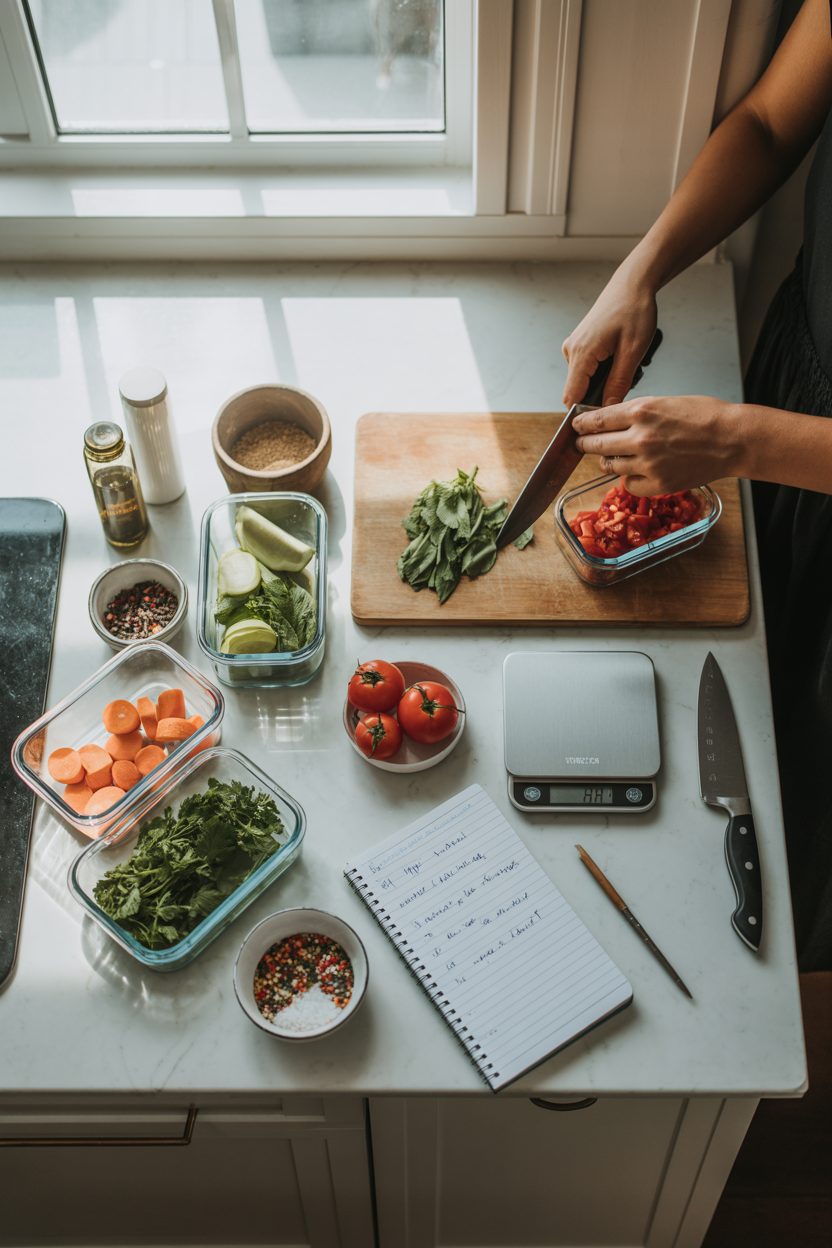
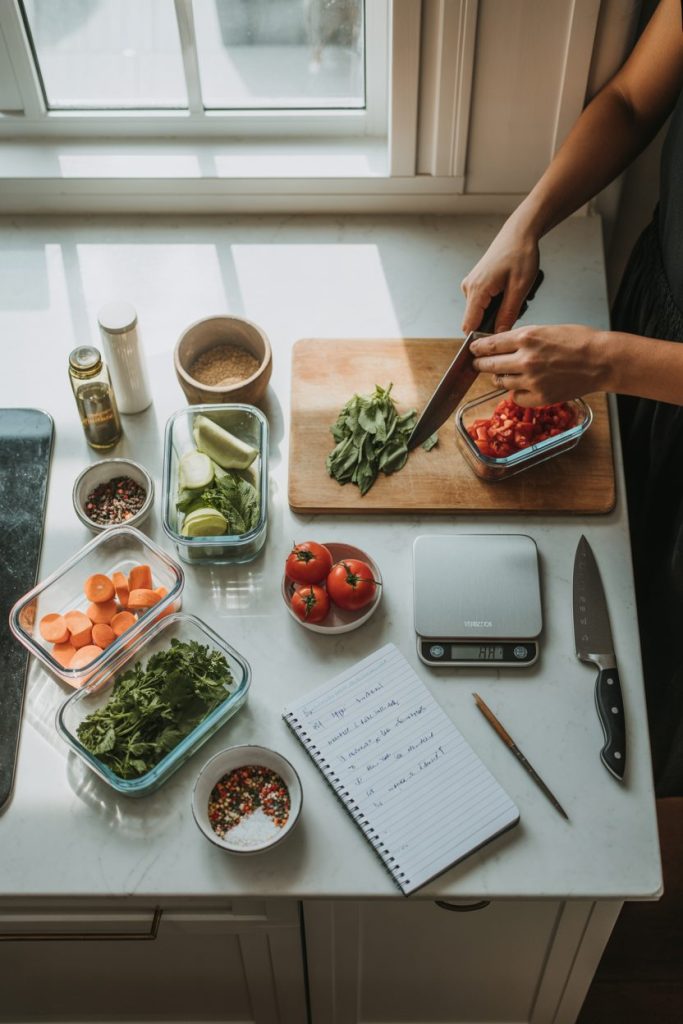
Before I start cooking anything, I chop all my vegetables, measure out my seasonings, and get everything organized. This restaurant kitchen technique seems fussy, but it makes the actual cooking so much faster and less stressful.
Everything’s ready to go when I need it. I’m not scrambling to dice onions while something’s burning on the stove. It’s all right there, prepped and waiting.
Daily Assembly
Some things I don’t pre-assemble. Salads, for example—I keep the components separate and throw them together in the morning. Takes ninety seconds and everything stays fresh and crisp.
Same with some grain bowls. I’ll have the grain, protein, and vegetables prepped separately, then assemble them into a bowl the night before or morning of. Slightly more work daily, but the payoff in food quality is worth it.
Troubleshooting When Meal Prep Goes Sideways
Even with a solid system, stuff goes wrong. Here’s how to handle common problems.
Problem: I Got Busy and Didn’t Prep
It happens. Don’t let one missed week turn into “I guess I’m not a meal prep person.” You are. You just had a busy week. Pick up some rotisserie chicken and pre-washed salad, throw together some quick meals, and get back on track next week.
Problem: I’m Already Sick of What I Prepped
This means you prepped too much of the same thing. Next time, prep fewer portions of more variety. Or keep some backup options in the freezer for exactly this situation—when you just can’t face another serving of the same meal.
Problem: Everything’s Getting Freezer Burned
You’re not packaging things properly. Food needs to be tightly wrapped or in proper freezer containers with minimal air exposure. Those cheap plastic containers from the grocery store aren’t cutting it. Invest in actual freezer-safe containers or heavy-duty freezer bags.
Problem: My Meals Are Boring
You’re not using enough seasoning or sauce variation. The same base ingredients can taste completely different depending on how you season and sauce them. Push yourself to use more aggressive seasoning than feels natural—food mutes slightly when reheated, so you need to oversalt and overspice a bit initially.
The Budget Reality of Meal Prepping
Let’s talk money because that’s what everyone wants to know. Does meal prep actually save you money?
Short answer: Yes, if you’re comparing it to eating out regularly. No, if you’re comparing it to the absolute cheapest way to eat (which would be rice and beans every day forever).
I spend about $70-90 per week on groceries for meal prep. That covers roughly 15-20 meals (breakfast, lunch, and most dinners). Per meal, that’s around $4-5. Compare that to $12-15 for takeout or even $8-10 for fast food, and you’re saving $100-200 per week easily.
Where to Save Money Without Sacrificing Quality
Buy proteins on sale and freeze them. Chicken thighs are cheaper than breasts and taste better anyway. Ground turkey goes on sale regularly. Buy a big package when it’s discounted and portion it out.
Frozen vegetables are your friend. They’re flash-frozen at peak freshness, they’re cheaper than fresh, and they last forever in your freezer. There’s zero shame in using frozen broccoli instead of fresh—it works just as well in meal prep.
Buy store brands for basics. Generic rice, oats, canned goods, and spices are usually identical to name brands. Save your money for things where quality actually matters, like your protein sources and good olive oil.
How to Actually Stay Consistent With This
Motivation fades. Systems last. Here’s how to build meal prep into your routine so solidly that you barely have to think about it.
Remove Decision Fatigue
Create a rotation of 6-8 meal prep combinations you know work. When Sunday rolls around, you’re not reinventing the wheel—you’re just picking from your proven list. Takes the mental load off completely.
I have mine saved in a note on my phone. When I’m planning, I just scroll through, pick what sounds good that week, and boom—instant grocery list. No thinking required.
Make It Enjoyable
I throw on a podcast or music I actually like. Meal prep isn’t a punishment—it’s just cooking. Make your kitchen a place you want to be for a couple hours.
Some people meal prep with a partner or roommate. You’re splitting the work and hanging out at the same time. Makes the whole process more fun and faster.
Track Your Wins
Keep a running list of how much money you’re saving or how much better you feel. When you’re tempted to skip a prep session, looking back at three months of consistency is surprisingly motivating.
Build In Flexibility
Some weeks I only prep four days instead of six. Some weeks I only prep lunches. That’s fine. The goal isn’t perfection—it’s having more prepared meals than you would’ve had otherwise.
Even prepping half your meals beats prepping zero of your meals. Give yourself permission to scale up and down based on what’s happening in your life.
Related Recipes You’ll Love
Want to see meal prep in action? Here are some recipes that work perfectly with the strategies we just covered:
Beginner-Friendly Options:
- Simple sheet pan chicken and vegetables
- Basic meal prep bowls with grain, protein, and veggies
- Easy slow cooker meal prep recipes
High-Protein Meal Prep:
- Seven-day high-protein meal prep plan
- Protein-packed lunch ideas for work
- High-protein breakfast meal prep options
Budget-Conscious Choices:
- Cheap meal prep ideas under $50 per week
- Bulk cooking strategies for large batches
The Bottom Line on Meal Prep
Here’s what meal prep really is: it’s choosing to spend a few hours on Sunday so that your entire week runs smoother. It’s deciding that future-you deserves to have good food available instead of scrambling for whatever’s quick.
You don’t need to be perfect at this. You don’t need Instagram-worthy containers with color-coded lids and printed labels. You just need to cook more food than you’ll eat in one sitting and save the rest for later. That’s it. That’s meal prep.
Start with something absurdly small—maybe just breakfast for three days. Build from there. Give yourself permission to use shortcuts like pre-cut vegetables or rotisserie chicken. Figure out what works for your schedule, your kitchen, and your actual life instead of trying to follow someone else’s system perfectly.
Most importantly, remember that one week of meal prep is better than zero weeks. Two weeks is better than one. Consistency beats perfection every single time. You’re not trying to win meal prep—you’re just trying to make your week a little easier, one Sunday at a time.