7-Day High-Protein Meal Prep for Busy Professionals
Look, I get it. You’re crushing deadlines, back-to-back meetings are eating your lunch hour (literally), and the last thing you want to think about is what you’re eating tomorrow. But here’s the thing—when you’re running on fumes and grabbing whatever’s convenient, your energy tanks, your focus goes sideways, and suddenly that 3 PM crash feels like a permanent state of being.
High-protein meal prep isn’t about becoming some fitness influencer who eats chicken and broccoli out of identical containers. It’s about having your act together enough that you’re not ordering takeout for the fourth night in a row or eating sad desk salads that leave you hungry an hour later. I’ve been meal prepping for years now, and honestly? It’s the difference between feeling like a functional adult and feeling like I’m barely keeping my head above water.
This guide is your roadmap to a full week of high-protein meals that actually taste good, keep you full, and don’t require you to spend your entire Sunday in the kitchen. We’re talking real food, real flavor, and real strategies that work when you’ve got approximately zero extra time to spare.
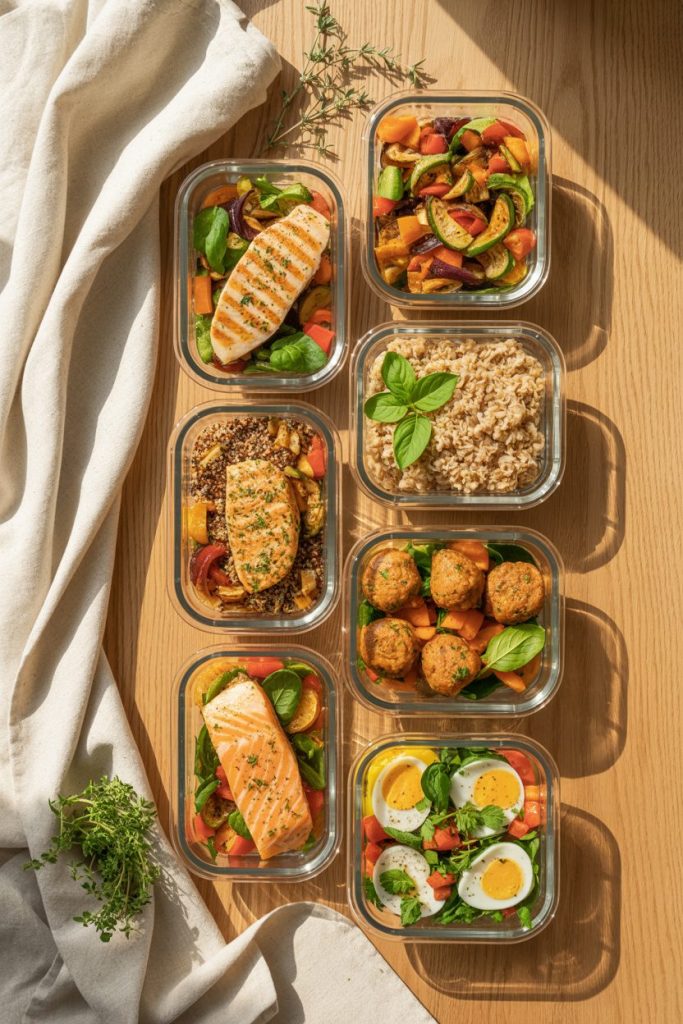
Why Protein Matters When You’re Constantly On The Go
Before we get into the actual meal plans, let’s talk about why protein deserves the spotlight here. When you’re juggling a thousand things at once, protein is basically your secret weapon. It keeps you satisfied longer than carbs alone, helps maintain your muscle mass (yes, even if you’re not hitting the gym religiously), and provides steady energy without the blood sugar rollercoaster.
Most busy professionals I know are either skipping meals entirely or grabbing whatever’s quick—usually something carb-heavy that leaves them hungry again in an hour. According to research on protein intake, aiming for around 25-30 grams of protein per meal helps optimize muscle protein synthesis and keeps hunger at bay. That’s not some arbitrary number—it’s based on how your body actually processes protein throughout the day.
The beauty of meal prepping with a protein focus is that you’re essentially building insurance against those moments when you’re tempted to hit the drive-through. When you’ve got a container of actually delicious food waiting in your fridge, the decision becomes a whole lot easier.
The Meal Prep Game Plan: Setting Yourself Up for Success
Here’s where most people go wrong with meal prep—they try to cook fourteen different recipes on Sunday afternoon and burn out before Wednesday. I’m not about that life, and you shouldn’t be either.
Pick Your Prep Day
Sunday works for most people, but if your weekends are packed, Wednesday night can split the difference nicely. You’re prepping for 3-4 days instead of seven, which feels way less overwhelming. Some folks even do a quick Sunday session for Monday through Wednesday, then a Thursday evening session for the rest of the week.
The Two-Protein Rule
Choose two protein sources max for your prep session. Maybe it’s chicken thighs and hard-boiled eggs. Maybe it’s ground turkey and salmon. The point is, you’re not trying to become a short-order cook. You’re batch-cooking proteins that can mix and match with different sides and seasonings throughout the week.
I usually grab this set of glass meal prep containers because they stack perfectly in my fridge and I can actually see what’s inside without playing a guessing game. Plus, they’re microwave-safe, which is non-negotiable when you’re reheating at your desk.
Carbs and Veggies in Bulk
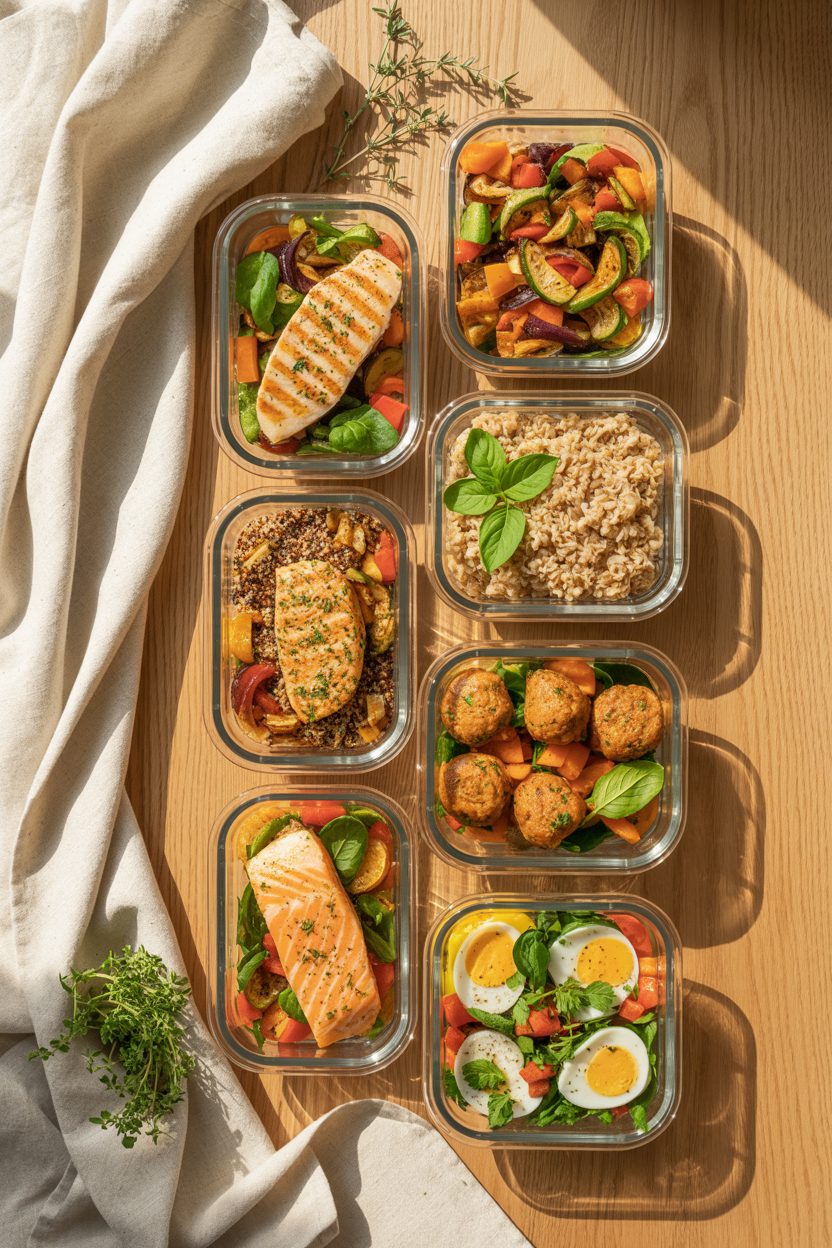
Roast a big sheet pan of vegetables. Cook a large batch of quinoa, rice, or sweet potatoes. These become your mix-and-match components. Monday might be chicken with roasted Brussels sprouts and quinoa. Tuesday could be the same chicken over a salad with a different dressing. You’re eating similar ingredients but the meals don’t feel repetitive.
Day 1-2: Starting Strong with Classic Combinations
Breakfast: Egg Muffin Cups with Turkey Sausage
These little guys are absolute lifesavers. Whisk together 12 eggs, add cooked turkey sausage, diced bell peppers, spinach, and shredded cheese. Pour into a muffin tin and bake at 350°F for about 20 minutes. You’ve just made grab-and-go breakfast for most of the week. Each muffin cup has roughly 8-10 grams of protein, so having two gives you a solid 16-20 grams to start your day.
I use this silicone muffin pan because nothing sticks to it—seriously, the muffins just pop right out, and cleanup takes about thirty seconds.
If you want to switch up your morning routine, you might also love these high-protein breakfast ideas or try a Mediterranean-inspired breakfast bowl for something lighter.
Lunch: Grilled Chicken Thighs with Roasted Vegetables and Quinoa
Forget chicken breasts—thighs are where it’s at. They’re more forgiving (read: harder to overcook into shoe leather), more flavorful, and honestly just better. Season them with whatever spices you’re feeling—I’m partial to a simple mix of paprika, garlic powder, and black pepper.
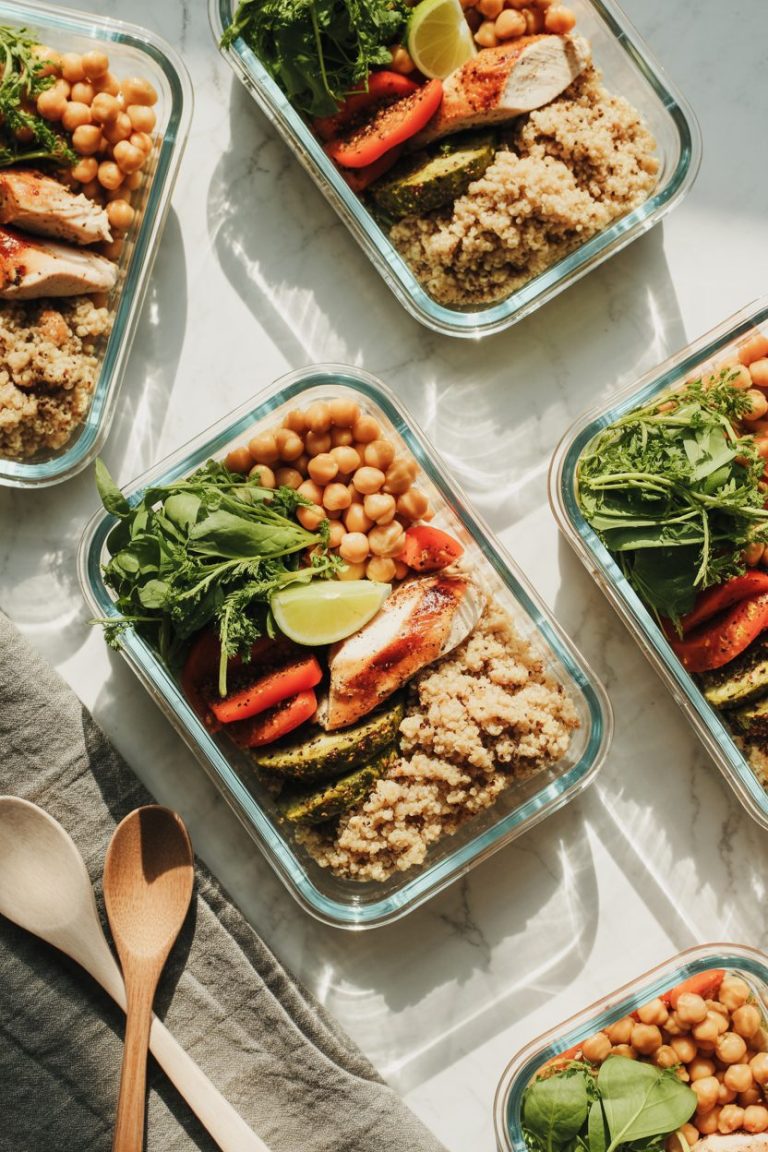
Grill or bake a batch of chicken thighs (about 6-8 pieces), then portion them out with roasted vegetables. My go-to veggie combo is broccoli, bell peppers, and red onions tossed in olive oil and roasted at 425°F for 25 minutes. Add a cup of cooked quinoa to each container and you’re looking at roughly 35-40 grams of protein per meal.
Dinner: Baked Salmon with Asparagus and Sweet Potato
Salmon is one of those proteins that sounds fancy but is ridiculously easy to prep. Season your fillets with lemon, dill, and a bit of garlic. Bake at 400°F for about 12-15 minutes depending on thickness. Pair it with roasted asparagus and cubed sweet potatoes.
One thing I’ve learned—don’t overcook salmon. It should still be slightly translucent in the center when you pull it out because it’ll continue cooking as it cools. Nobody wants dry, chalky salmon.
Speaking of fish, if you’re looking for more ways to incorporate seafood, check out these protein-packed fish recipes or try a complete seafood meal plan for variety throughout the week.
Day 3-4: Switching Things Up Without Extra Work
Breakfast: Greek Yogurt Protein Bowls
This is where meal prep gets smart instead of hard. Buy high-quality Greek yogurt (aim for at least 15 grams of protein per serving). Portion it into containers, then create little toppings stations—one container with sliced almonds, another with fresh berries, maybe some granola if you’re into that.
In the morning, you assemble. Takes literally ninety seconds. Add a scoop of protein powder if you want to push it to 30+ grams of protein, but honestly, Greek yogurt with nuts and maybe a drizzle of honey is plenty satisfying. If you’re looking at options, plain Greek yogurt typically packs more protein than flavored varieties—plus you control the sweetness level.
Lunch: Turkey Taco Bowls
Take that ground turkey you cooked on Sunday (you did cook ground turkey, right?) and turn it into taco-seasoned filling. Layer it over cauliflower rice or regular rice, add black beans, corn, diced tomatoes, a bit of cheese, and some Greek yogurt as a sour cream substitute.
The beauty here is that the same base protein works for completely different flavor profiles. Monday’s chicken was probably seasoned with Italian herbs; Wednesday’s turkey is going full Tex-Mex. Different meal, same efficient prep.
I season my ground turkey with this taco seasoning blend that doesn’t have a bunch of weird additives—just actual spices. Makes a huge difference in flavor.
Dinner: Chicken and Veggie Stir-Fry
Remember that chicken you made on Day 1? Tonight it’s getting an Asian-inspired makeover. Cut it into strips, toss it in a hot pan with snap peas, bell peppers, and whatever other vegetables are hanging out in your crisper drawer. Add a simple sauce—soy sauce, a bit of honey, some ginger, and garlic.
Serve over rice or cauliflower rice. Same protein source, completely different meal. This is the meal prep magic nobody tells you about—it’s not about eating identical meals all week; it’s about having prepped components you can remix.
For more stir-fry inspiration, try these quick high-protein dinners or explore these Asian-inspired protein bowls for different flavor combinations.
Day 5-6: The Home Stretch
Breakfast: Cottage Cheese Pancakes
Okay, hear me out on this one. Cottage cheese pancakes sound weird, but they’re legitimately good and pack about 20 grams of protein per serving. Blend cottage cheese with eggs, a bit of oat flour, and vanilla. Cook them up like regular pancakes.
Make a big batch, freeze what you won’t eat in the next couple days, and reheat them in the toaster. Top with fresh berries or a small drizzle of maple syrup. They’re slightly denser than regular pancakes but in a good, filling way.
Lunch: Beef and Broccoli with Brown Rice
If you’re sick of chicken and turkey (fair), this is where beef enters the chat. Thin-sliced beef (flank steak or sirloin works great) cooks super quickly in a hot pan. Toss it with steamed broccoli and a simple sauce made from soy sauce, garlic, and a touch of brown sugar.
Portion it over brown rice and you’re looking at 30+ grams of protein per serving. The beef prep takes maybe fifteen minutes if your pan is properly hot—we’re talking quick sear, not a slow braise.
Dinner: Baked Cod with Roasted Root Vegetables
Cod is an underrated protein source—mild flavor, super affordable, and it cooks in about ten minutes. Season it simply with lemon, herbs, and olive oil. Bake at 400°F until it flakes easily with a fork.
Pair it with roasted carrots, parsnips, and potatoes. These root vegetables are heartier than your typical greens, so they reheat beautifully throughout the week. Each serving gives you around 25-30 grams of protein depending on portion size.
Looking for more lean protein options? These white fish recipes and complete clean eating meal plans offer plenty of variety without getting repetitive.
Day 7: Keep It Simple or Order In
Let’s be real—by Day 7, you might not want to look at another meal prep container. And that’s completely fine. This is where you either keep it super simple (think rotisserie chicken from the grocery store with pre-washed salad) or you order something that fits your nutritional goals.
The whole point of meal prepping isn’t to never eat out again. It’s to make sure that most of your week is covered so when you do grab takeout or go to a restaurant, it’s a choice, not a desperate necessity.
If you’re still feeling motivated, though, leftovers from earlier in the week can easily carry you through. That turkey taco filling? Throw it in a wrap. Those egg muffins? Still good. Don’t overthink it.
Smart Snack Prep for Between-Meeting Hunger
Let’s talk about the 3 PM slump. You know the one—you’re not hungry enough for a full meal, but you need something or you’ll eat the decorative candy in the conference room.
Protein-Packed Snack Ideas:
Hard-boiled eggs are the MVP here. Boil a dozen on Sunday, keep them in the fridge, and you’ve got instant protein whenever you need it. Pair one with a handful of almonds and you’re looking at about 12-15 grams of protein total.
String cheese and turkey roll-ups take about ten seconds to assemble. Roll a slice of deli turkey around a stick of string cheese. Boom—portable, no-mess protein.
Protein balls made with peanut butter, oats, and protein powder can be batch-made and frozen. Pop one in your bag in the morning and it’ll be perfectly thawed by afternoon. Each ball usually clocks in around 5-6 grams of protein.
I keep these small food storage containers in my desk drawer at work specifically for snacks. Portion control without having to think about it.
If you’re tired of the same old snacks, you’ll want to check out these high-protein snack ideas or try these energy ball recipes for something different.
The Containers and Tools That Actually Matter
You don’t need a ton of fancy equipment to meal prep successfully, but a few key items make life significantly easier.
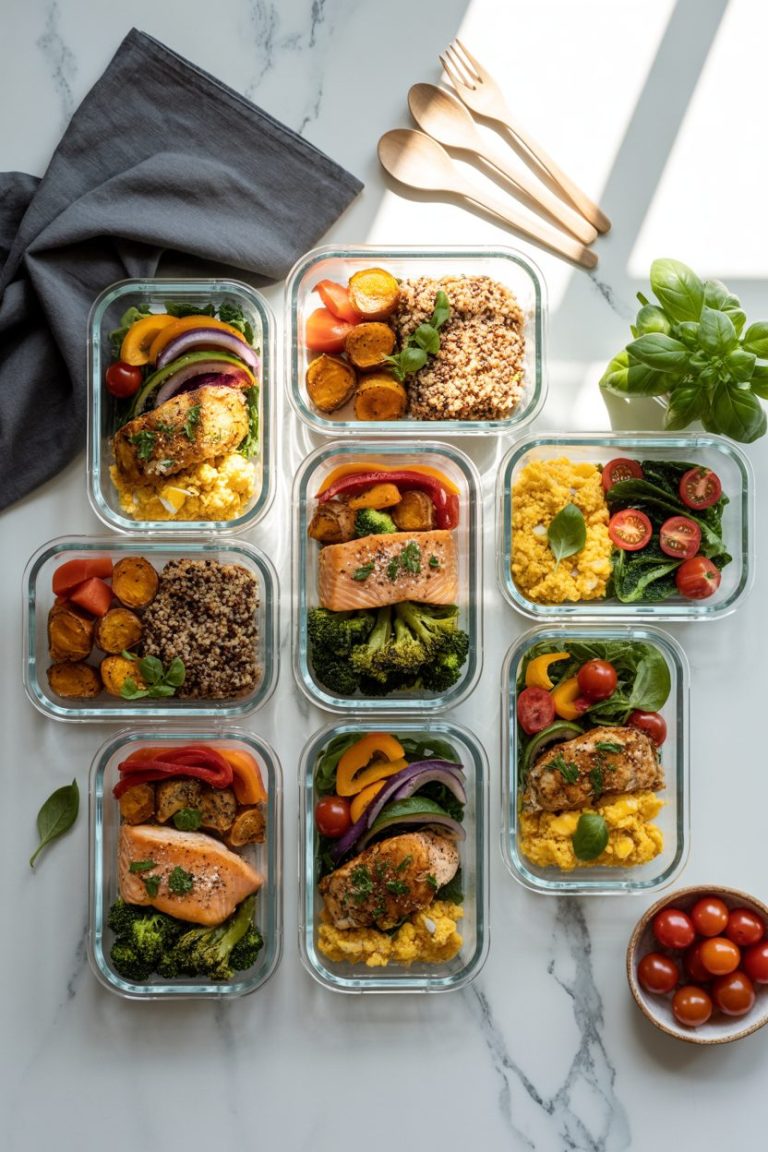
Glass Containers: Seriously, invest in quality glass meal prep containers. Plastic gets gross over time, stains easily, and you’ll end up replacing it constantly. Glass lasts forever, doesn’t retain smells or stains, and you can reheat directly in them.
A Good Set of Sheet Pans: Half-sheet pans are your best friend for roasting vegetables and proteins simultaneously. I have three and use all of them during every prep session. Line them with parchment paper or this reusable silicone mat to make cleanup even easier.
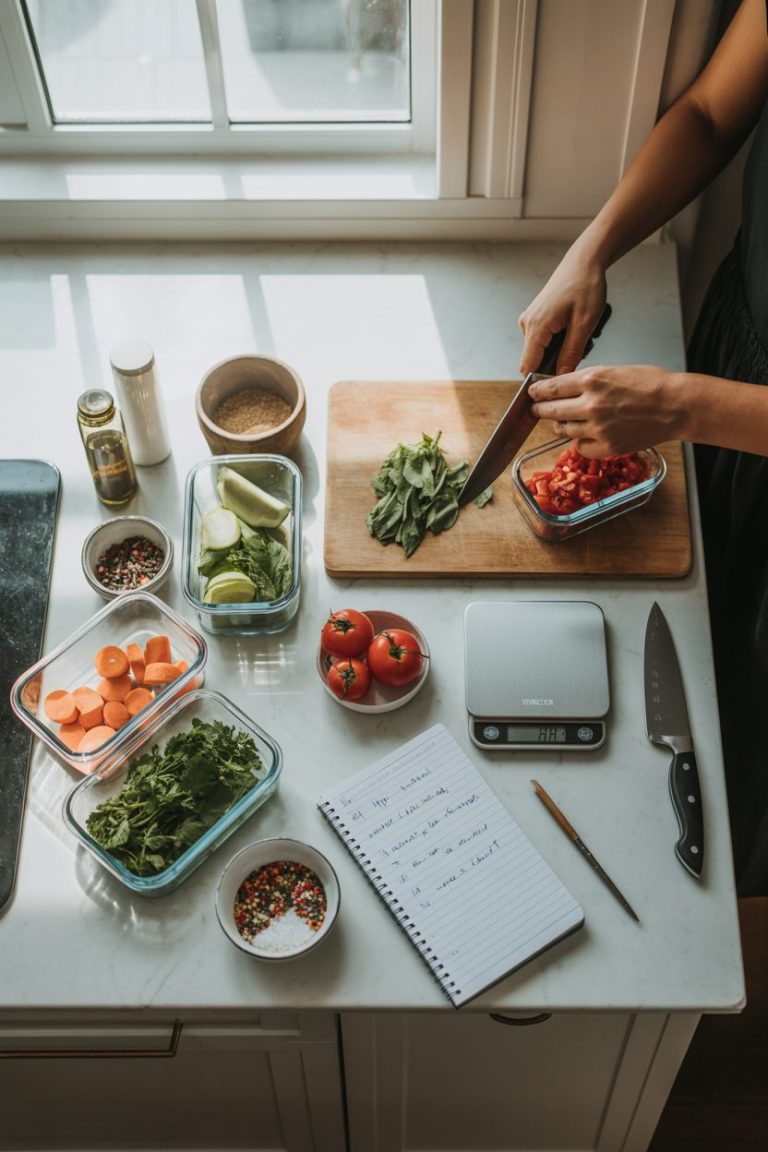
Sharp Knives: You can’t efficiently meal prep with dull knives. You just can’t. It slows you down and makes everything more dangerous. Keep your knives sharp or grab a decent knife sharpener and use it regularly.
Quality Food Scale: If you’re serious about hitting protein targets, a simple digital kitchen scale helps ensure you’re portioning accurately. You don’t need to be obsessive about it, but it’s useful when you’re first learning what appropriate portions look like.
Making Flavors Actually Interesting Throughout The Week
The biggest complaint about meal prep is that everything tastes the same by Wednesday. Here’s how to fix that without cooking seven completely different meals.
The Sauce Strategy: Make or buy 3-4 different sauces to keep in your fridge. A good teriyaki, a chimichurri, a yogurt-based ranch, and maybe a spicy sriracha mayo. Same protein and vegetables can taste completely different depending on what you dress them with.
When comparing different condiments, yogurt-based sauces typically offer extra protein compared to mayo-based alternatives—another small way to boost your daily intake without thinking about it.
Spice Blends Are Your Friend: Season different protein batches with completely different spice profiles. Monday’s chicken gets Italian seasoning. Thursday’s chicken gets curry powder. Same cooking method, wildly different end result.
Fresh Elements: Add something fresh when you actually eat the meal. Chopped cilantro, a squeeze of lime, fresh berries, sliced avocado—these additions take thirty seconds but make reheated food taste way more alive.
Troubleshooting Common Meal Prep Problems
Problem: Everything gets soggy by mid-week
Keep wet and dry ingredients separate when possible. Store dressings in small containers and add them right before eating. Don’t put hot food directly into closed containers—let it cool first to avoid condensation.
Problem: I get bored eating the same things
You’re probably batch-cooking too much of one thing. Instead of making enough chicken for all seven lunches, make enough for three lunches and three dinners, then use different proteins for the other meals. Variety comes from smart planning, not from cooking more recipes.
Problem: My vegetables get gross and slimy
Some vegetables don’t reheat well. Leafy greens, cucumbers, and tomatoes are better added fresh. Hardier vegetables like broccoli, Brussels sprouts, carrots, and peppers hold up much better throughout the week.
Problem: I run out of time
Scale back. Prep for three days instead of seven. Or prep just lunches and keep dinners simple with quick-cook proteins. Meal prep should make your life easier, not become another stressful obligation.
The Actual Cost Breakdown (Because We’re All Thinking It)
Meal prepping often saves money compared to eating out, but let’s be honest about the upfront investment. A solid week of high-protein meal prep for one person usually runs between $60-$80 at the grocery store, depending on your protein choices and where you shop.
That breaks down to roughly $8-11 per day for three meals. Compare that to $10-15 for a single restaurant meal, and you’re easily saving $200-300 per month. The math is pretty straightforward.
Protein is typically your biggest expense. Chicken thighs and ground turkey are budget-friendly. Salmon and beef will cost more. Eggs are consistently cheap and versatile. Shop sales, buy in bulk when possible, and don’t be afraid to use frozen vegetables—they’re flash-frozen at peak freshness and often just as nutritious as fresh.
Related Recipes You’ll Love
Looking for more ways to keep your protein game strong? Here are some recipes that work perfectly with this meal prep approach:
More Breakfast Options:
- High-protein overnight oats variations
- Savory breakfast bowls with eggs and vegetables
Lunch Inspiration:
- Mason jar salads with protein-packed ingredients
- Buddha bowls with multiple protein sources
Quick Dinner Ideas:
- Sheet pan chicken and vegetables
- One-pot high-protein pasta dishes
Snack Solutions:
- No-bake protein energy bites
- Greek yogurt parfait combinations
Wrapping This Up
Here’s the truth about meal prepping for busy professionals—it’s not about perfection. It’s about having enough prepared food that when life gets chaotic (which it will), you’re not left scrambling or settling for whatever’s quickest.
Some weeks you’ll nail it. You’ll prep everything on Sunday, your containers will look Instagram-worthy, and you’ll feel like you have your entire life together. Other weeks you’ll manage to prep maybe three meals and have to wing the rest. Both scenarios are completely fine.
The goal is progress, not perfection. Start with prepping just lunches for three days. Once that feels manageable, add breakfast. Then maybe extend to five days. Find your rhythm instead of forcing yourself into someone else’s system.
Your future self—the one who’s not spending $15 on mediocre takeout or eating vending machine snacks for lunch—will thank you for making even a small effort here. And honestly? Once you get into the groove of it, meal prepping becomes one of those things that just makes everything else easier. More energy, better focus, fewer decisions to make when you’re already decision-fatigued.
Start small, be consistent, and remember that every meal you prep is one less meal you have to figure out when you’re already exhausted. That’s worth a couple hours on Sunday, IMO.